








Tanjore Painting, Lord Vishnu, with Consorts, Antique,
£4,825
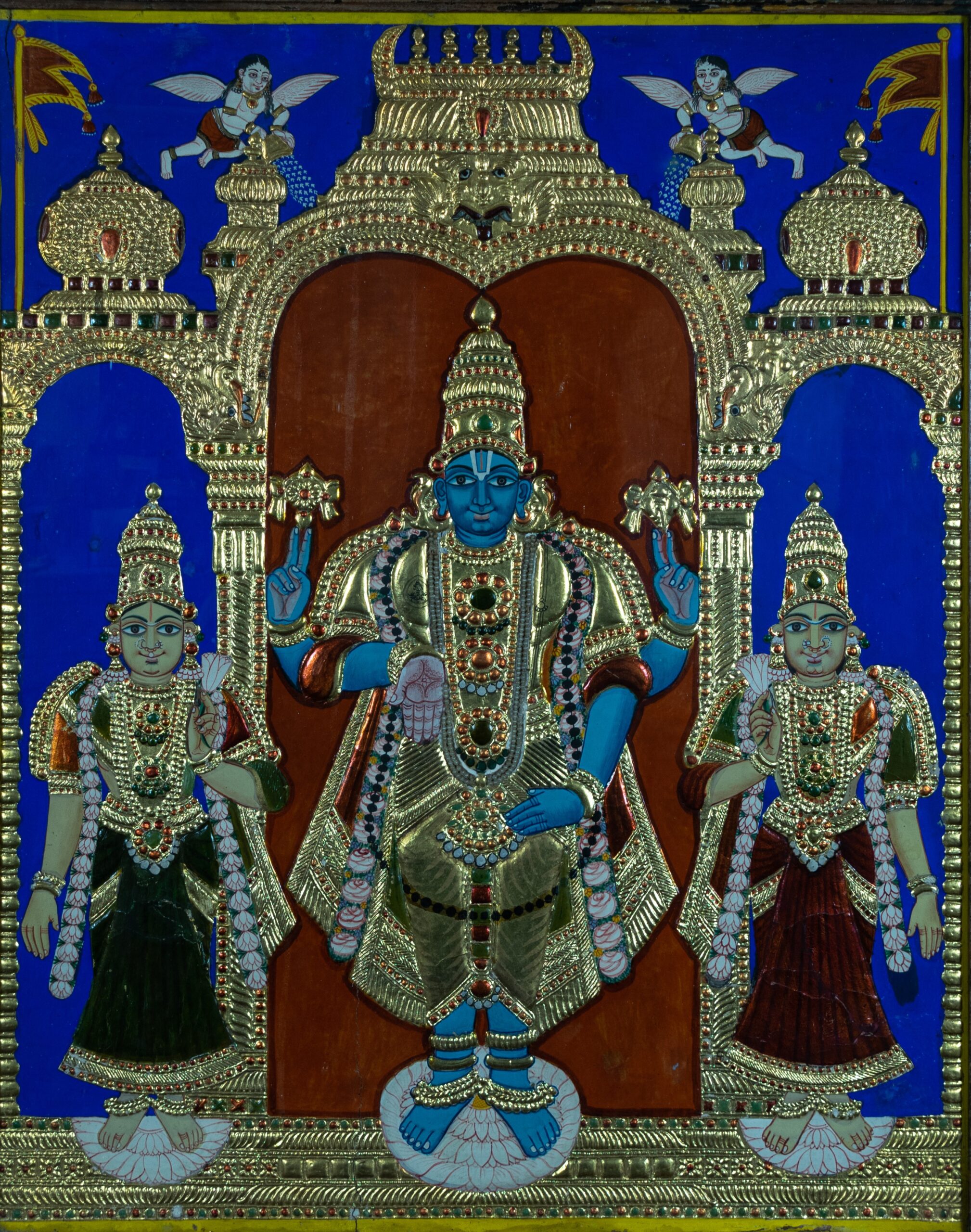
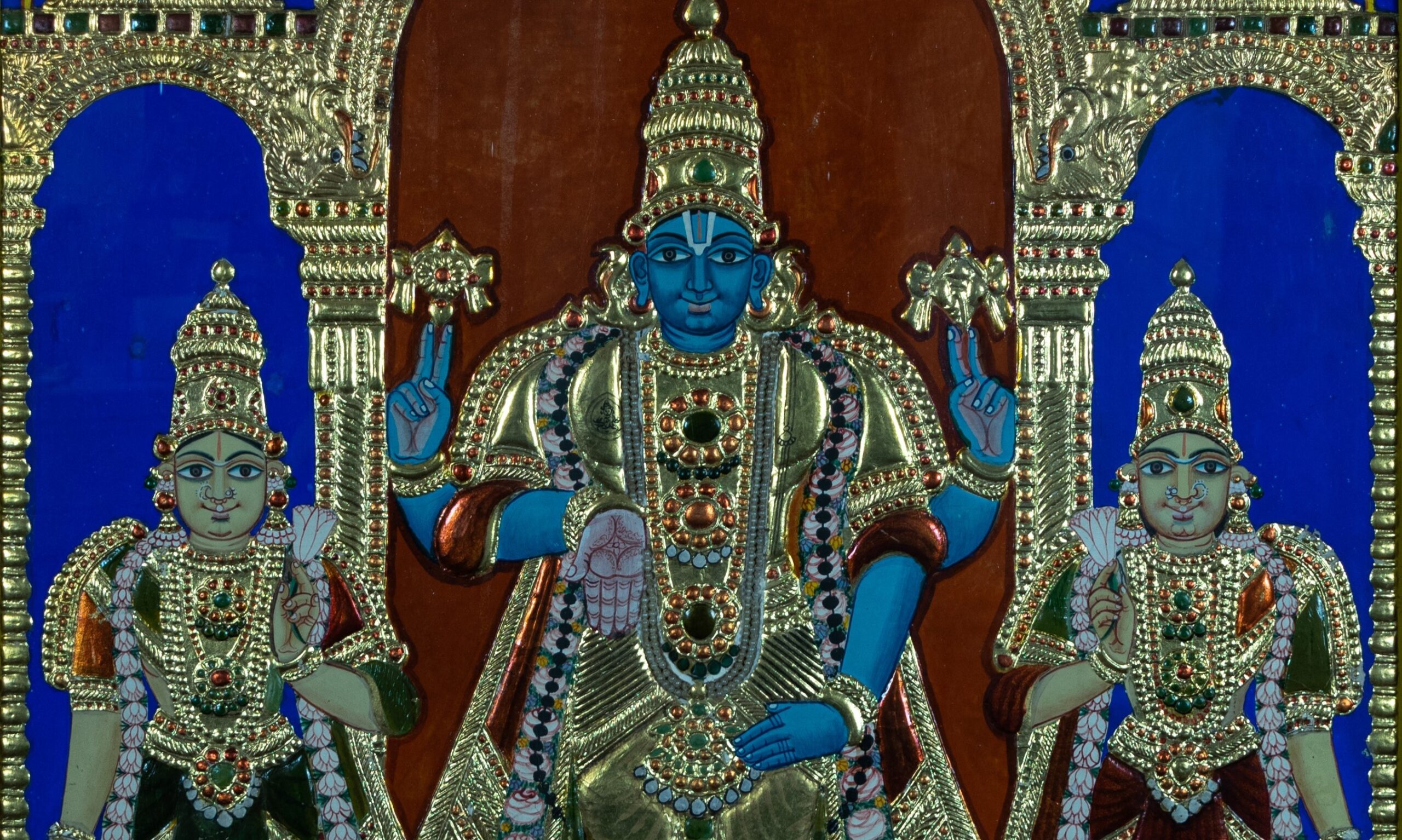
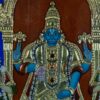
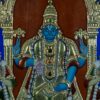
Tanjore Painting, 19th-century, Vishnu with His Two Consorts, Sri Devi and Bhoo Devi.
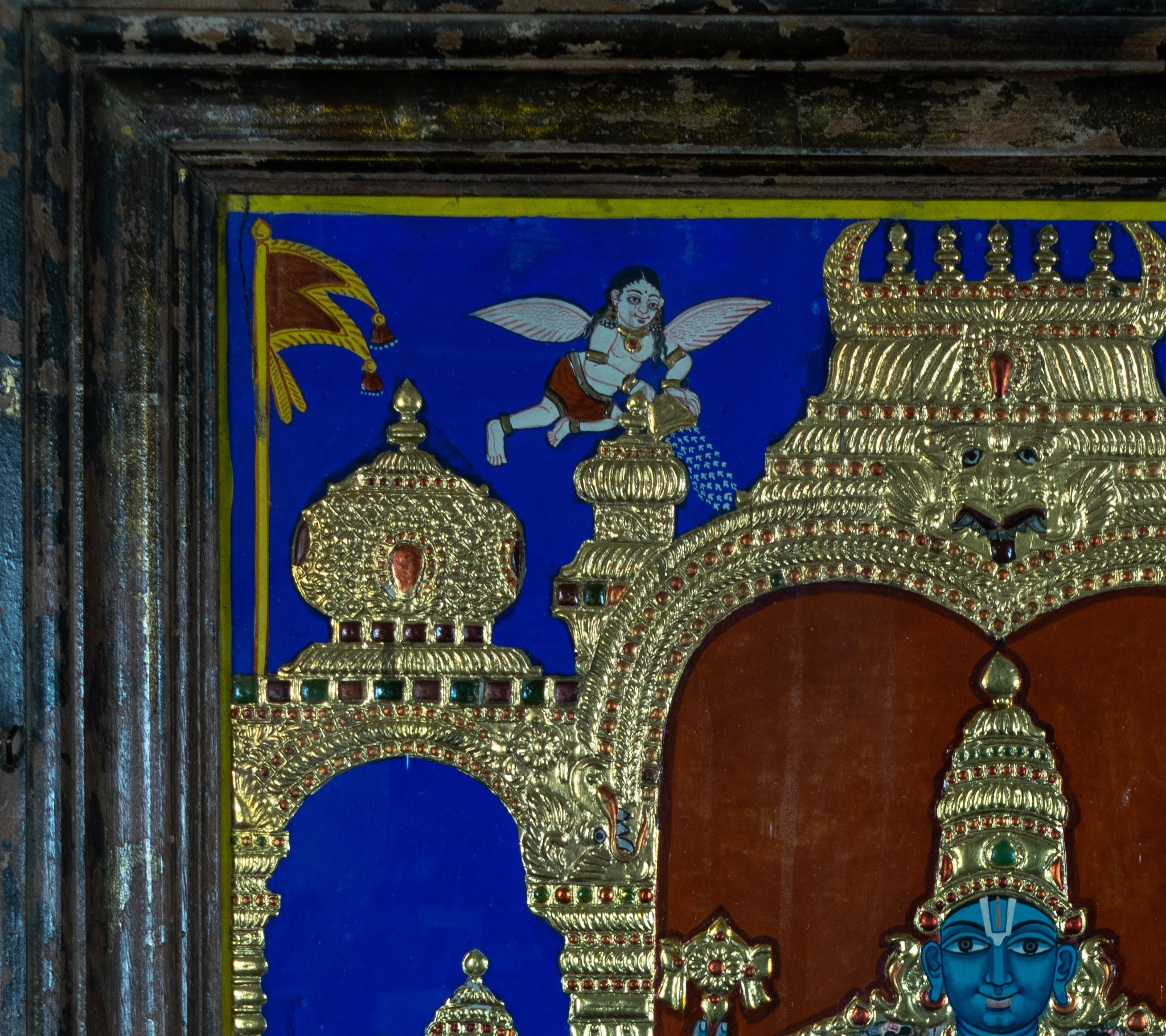
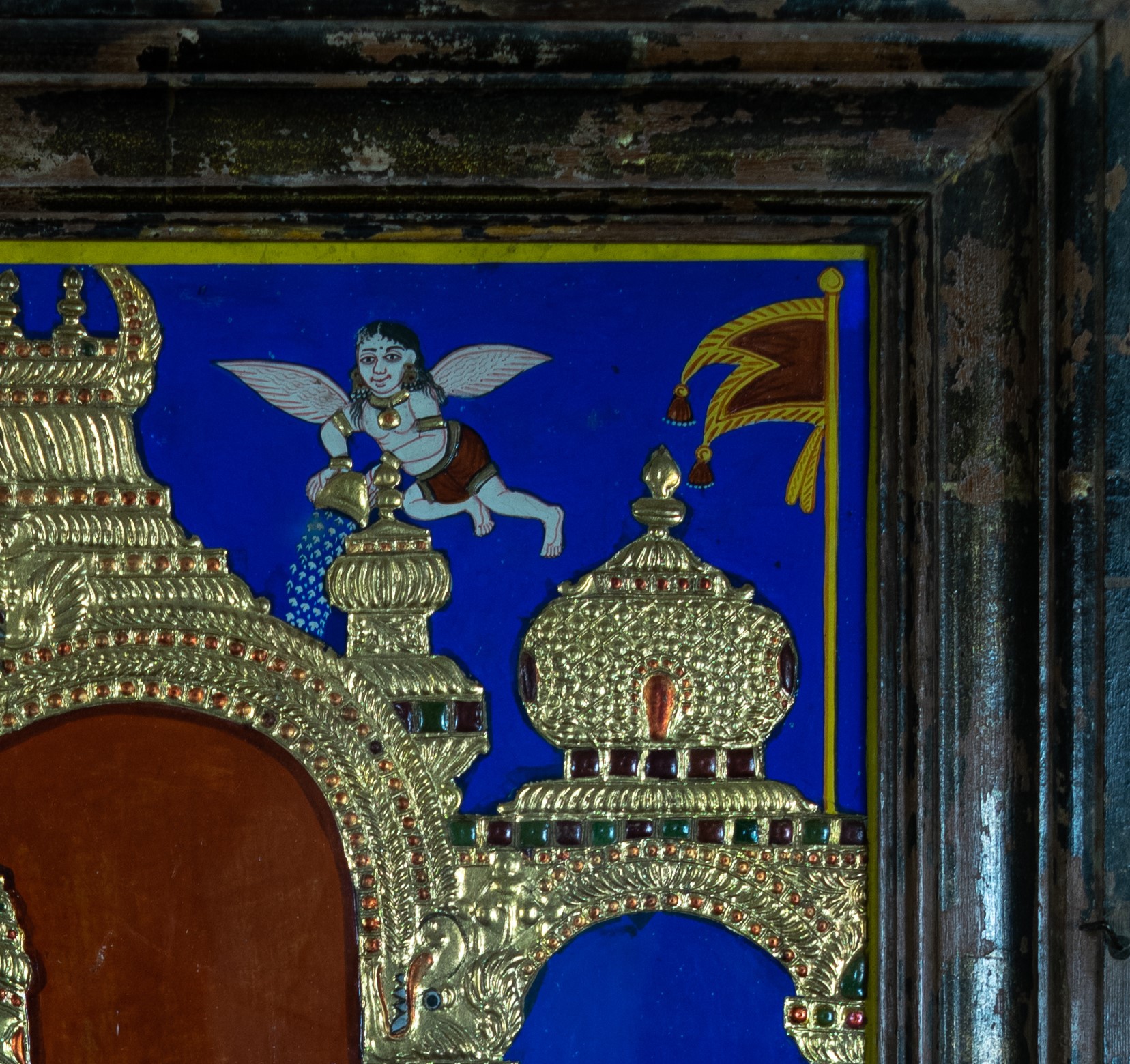
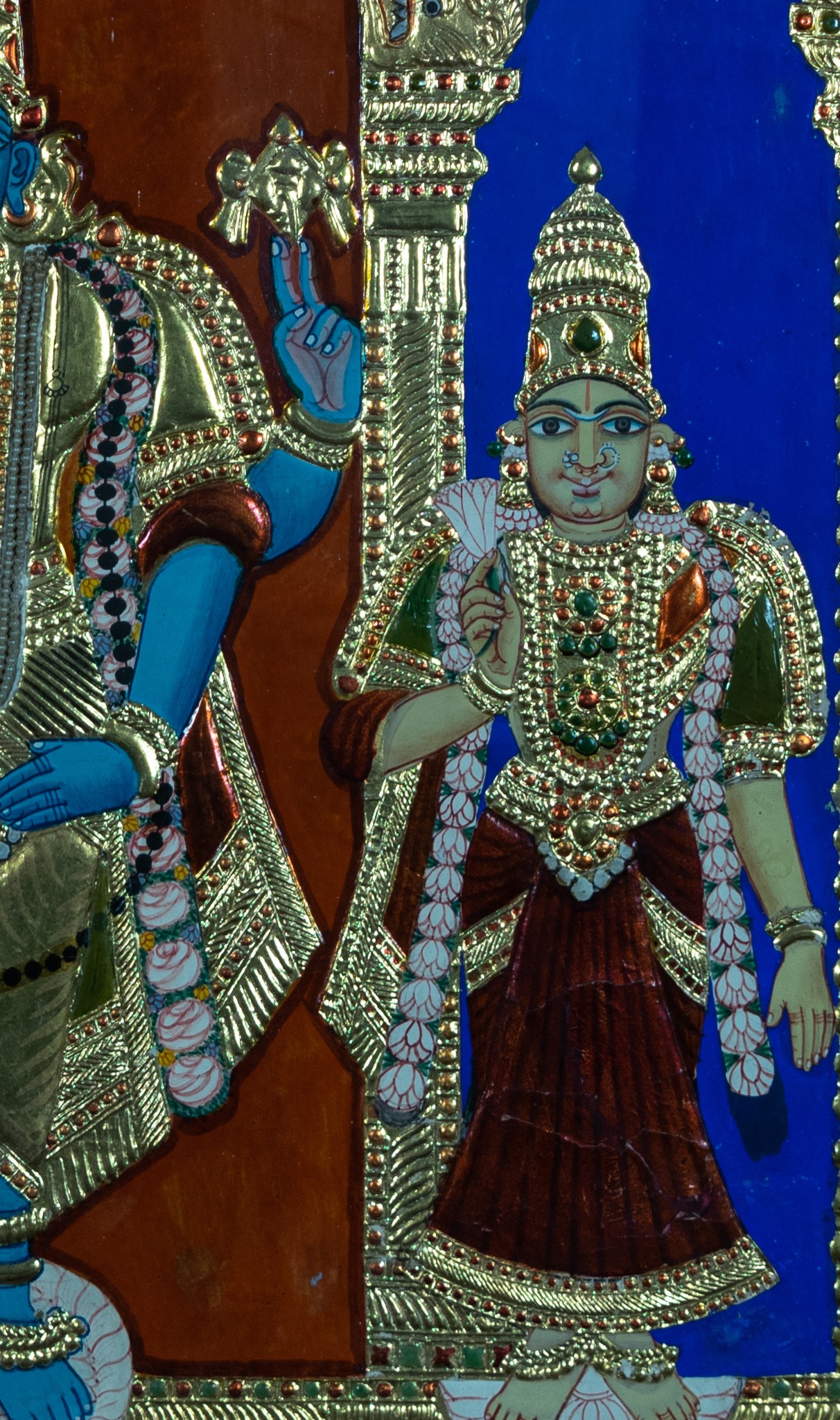
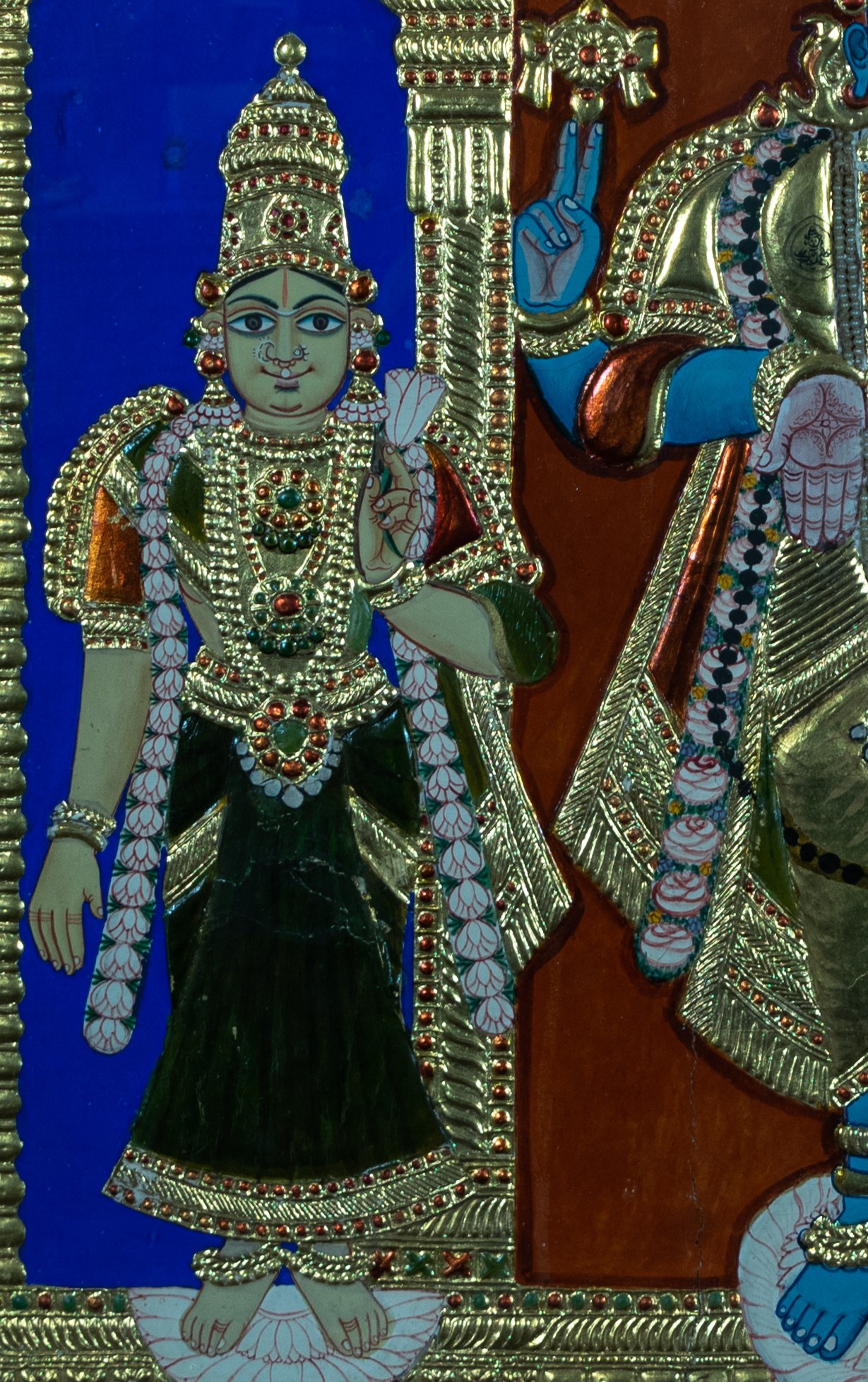
This rare and finely preserved Tanjore painting depicts the Hindu god Vishnu accompanied by his two divine consorts, Sri Devi (Lakshmi) and Bhoo Devi (Earth Goddess), standing beneath an elaborate temple arch populated with celestial attendants. The composition exemplifies the grandeur and sacred iconography associated with South Indian devotional painting of the 18th and 19th centuries.
Description
Tanjore Painting, 19th-century, Vishnu with His Two Consorts, Sri Devi and Bhoo Devi.
This rare and finely preserved Tanjore painting depicts the Hindu god Vishnu accompanied by his two divine consorts, Sri Devi (Lakshmi) and Bhoo Devi (Earth Goddess), standing beneath an elaborate temple arch populated with celestial attendants. The composition exemplifies the grandeur and sacred iconography associated with South Indian devotional painting of the 18th and 19th centuries.
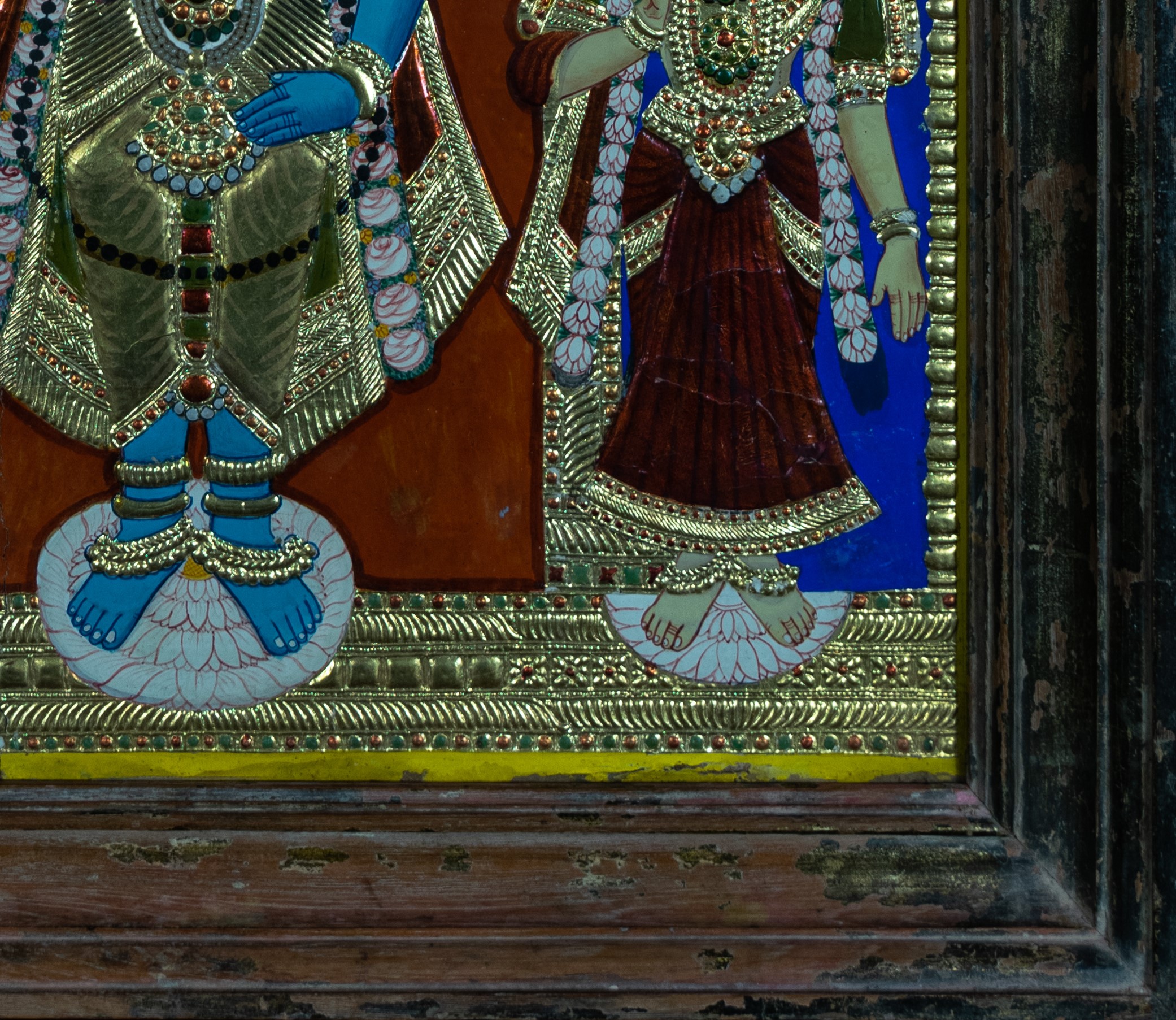
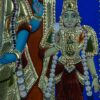
Executed on board using traditional mineral and organic pigments derived from powdered stones, flowers, and natural dyes, the painting features extensive raised gesso relief embellished with gold foil and decorative detailing. The saturated cobalt blue background and jewel-like ornamentation create a striking visual contrast, enhancing the spiritual presence of the figures.
Tanjore painting, developed under the Maratha rulers of Tanjore, is celebrated for its bold colour fields, symmetrical composition, gilded surface treatments, and sculptural dimensionality. Surviving examples retaining original frames and glazing are increasingly rare.
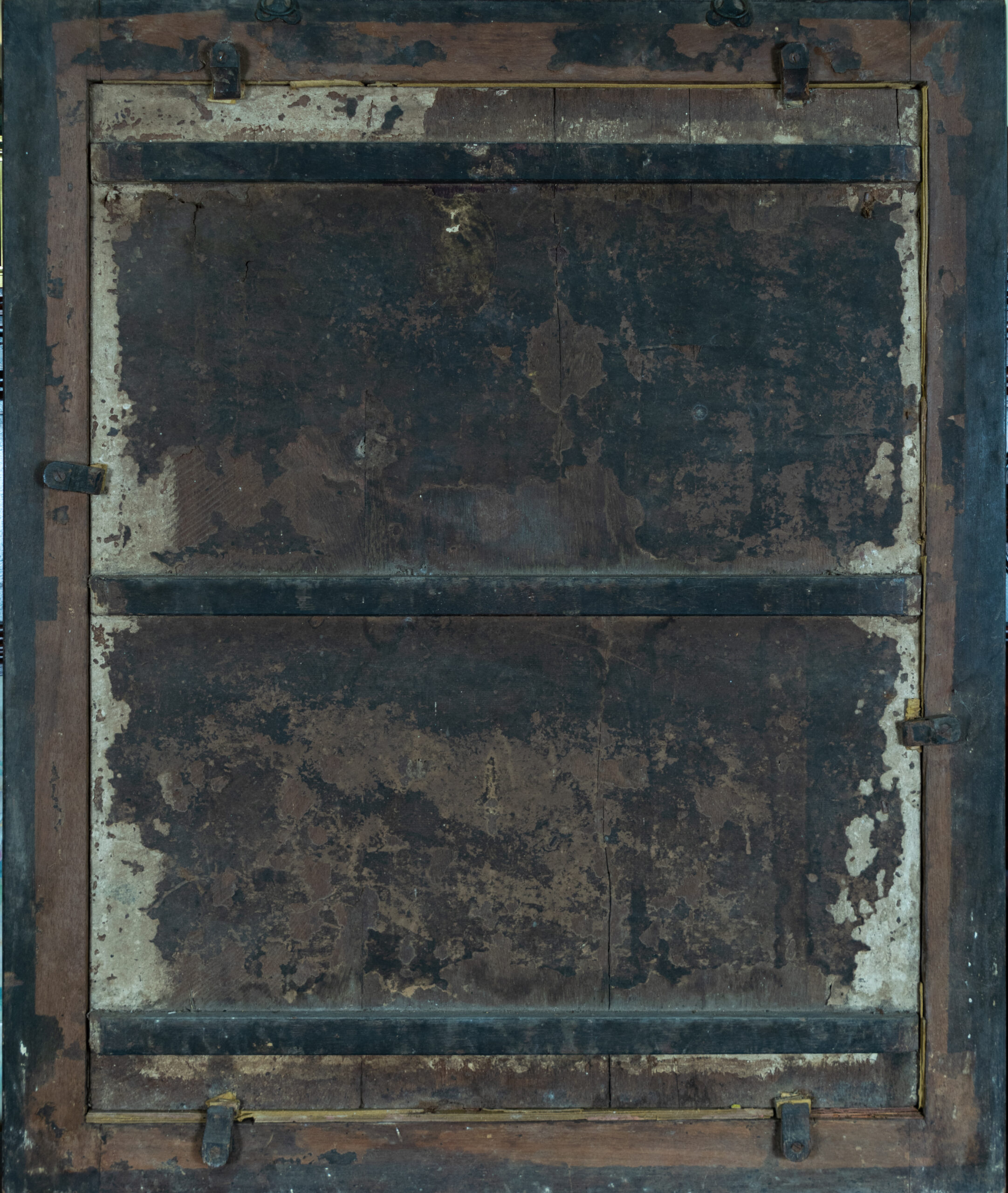
This painting originates from a private collection in Sussex, United Kingdom, and remains housed in its original glazed frame, offering both historical integrity and immediate display appeal.
A distinguished example of South Indian sacred art, suitable for collectors of Asian art, religious iconography, and museum-quality decorative objects.
Most objects sold in our gallery are antiques, vintage or used; therefore, they will show signs of being antique, vintage or used. There may be signs of scratches, discolouration, chips, cracks, wear and tear, unknown manufacturers and/or patterns. Please see the photographs as they form part of the description. Overseas buyers in some countries may be required to pay any import duties, taxes, or fees. All items are meticulously wrapped and prepared for both UK and international shipping.
A Legacy in Paint: Unveiling the Rich History of Tanjore Paintings
This exquisite Tanjore painting, crafted in the 19th century, embodies a rich artistic tradition that originated in South India’s Thanjavur region (anglicized as Tanjore). While the art form’s roots trace back to the 17th century under Nayaka rule, it truly flourished during the Maratha reign (1676-1855). This period saw a surge in artistic expression, including classical dance, music, and literature, all influencing the development of the Tanjore style.
Recognised as a Geographical Indication by the Government of India, Tanjore paintings are known for their:
- Vibrant Colours: Rich pigments, often derived from natural sources, create a visually stunning effect.
- Simple Compositions: The central figures are typically placed prominently, surrounded by supporting elements.
- Glimmering Gold: Though less visible on this specific piece due to age, gold leaf work was a hallmark of Tanjore paintings.
- Symbolic Details: Influences from various artistic styles, including Deccani, Vijayanagara, Maratha, and even European, are often subtly woven into the composition.
A Blend of Devotion and Artistry:
Traditionally serving as devotional icons, Tanjore paintings often depict Hindu deities like the one featured here. The central figures are frequently placed within architecturally defined spaces, reflecting elements of religious structures. While Hindu themes are prominent, there are instances of Jain, Sikh, Muslim, and even secular subjects depicted in this art form.
This detailed description focuses on the historical context and artistic significance of Tanjore paintings without overwhelming the reader with excessive details. It complements the specific information about the painting you’re selling.